Skip to content

CPIL / MBZUAI / McGill University / Mila

Cyber-Physical Intelligence Lab

Advancing trustworthy, efficient, and agentic AI for the cyber-physical world.

CPIL is an academic research lab studying intelligent systems for the cyber-physical world. Led by Prof. Xue (Steve) Liu, the lab brings together researchers across MBZUAI, McGill University, and Mila to advance AI, learning, reasoning, optimization, and intelligent infrastructure.

Cyber-Physical Intelligence Lab banner with MBZUAI, McGill, Mila, and cyber-physical AI imagery
Research at CPIL spans learning, reasoning, control, communication networks, and infrastructure-scale cyber-physical systems.

Overview

Frontier AI for cyber-physical intelligence.

Cyber-Physical Intelligence Lab is led by Prof. Xue (Steve) Liu. The lab develops methods and systems for trustworthy, efficient, and agentic intelligence in environments where computation, data, infrastructure, and physical processes interact.

Research spans large models, efficient inference, retrieval-augmented reasoning, representation learning, reinforcement learning, federated learning, optimization, trustworthy evaluation, and AI for infrastructure.

CPIL connects foundational AI research with applications in cyber-physical systems, digital twins, wireless networks, data centers, energy systems, and autonomous control.

Research Areas

Core themes

Research overview

Theme 01

Large Model Optimization and Efficient Inference

Methods and systems for making large language models more efficient, scalable, and deployable, including quantization, pruning recovery, early-exit inference, heterogeneous inference, and KV cache compression.

Theme 02

Agentic AI, Retrieval-Augmented Reasoning, and Evaluation

Benchmarks, training methods, and runtime frameworks for AI agents that retrieve evidence, use tools, receive feedback, and operate across long-horizon workflows.

Theme 03

Representation Learning, Alignment, and Knowledge Distillation

Robust and transferable representations, stable model alignment, reinforcement learning from human feedback, and data synthesis for knowledge distillation.

Theme 04

Diffusion Models and Black-Box Optimization

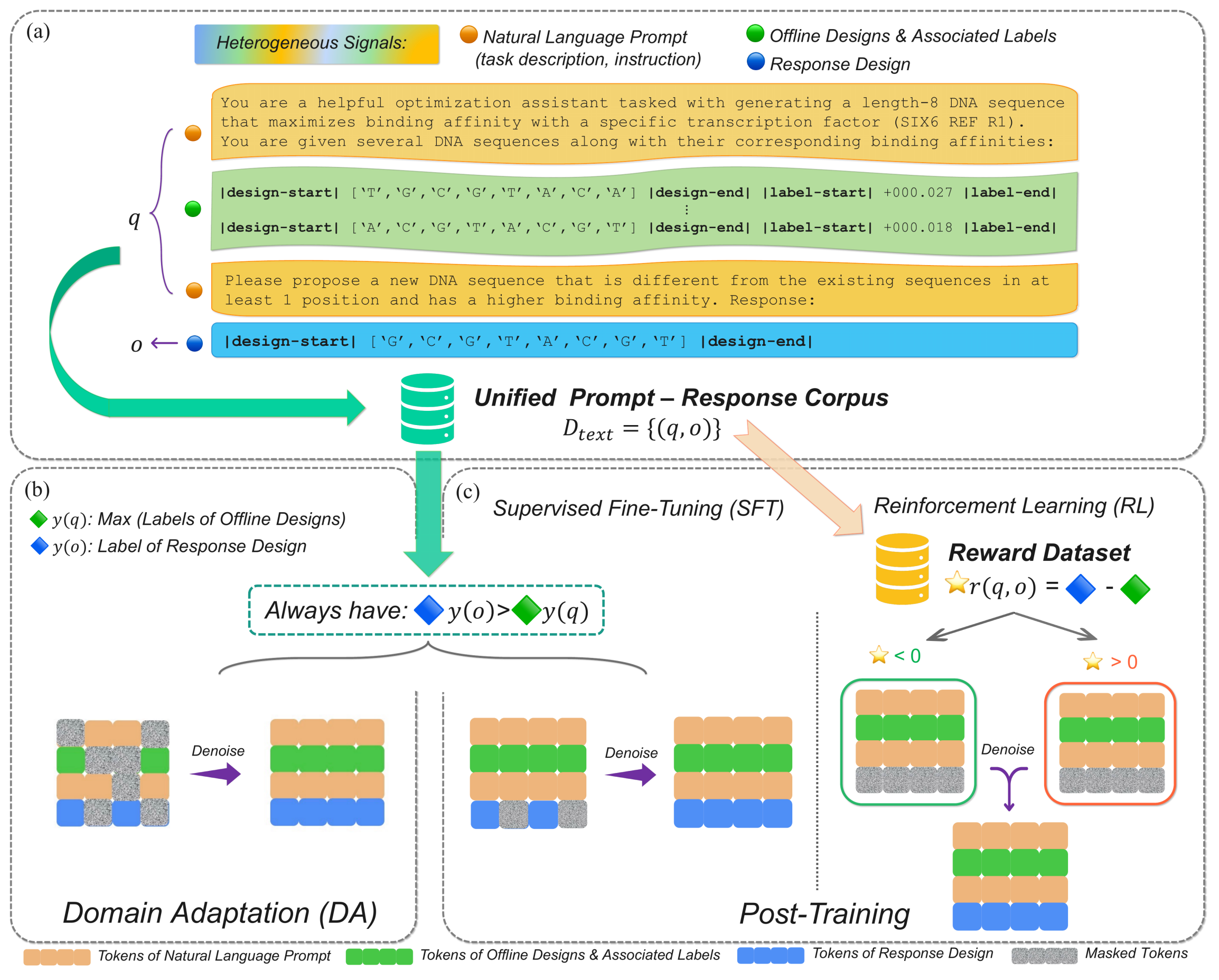
Diffusion language models and conditional generative modeling for offline black-box optimization, design problems, and settings where labels or experiments are expensive.

Theme 05

Federated Learning and Trustworthy AI

Efficient and trustworthy learning methods for distributed, resource-constrained, and heterogeneous environments, including edge devices and non-IID settings.

Theme 06

Cyber-Physical Intelligence and AI for Infrastructure

AI for intelligent infrastructure, data centers, wireless networks, digital twins, energy systems, autonomous control, and real-world optimization constraints.

Projects

Featured research directions

Browse projects
Visualization for Sample Project Entry

Sample Project Entry

active

A sample CPIL project entry showing the fields maintainers and contributors should fill in when adding a real project.

Project summary

Use this sample as a template for future project submissions. Replace the title, descriptions, members, tags, image, links, status, featured flag, and sort order with verified project information before merging a pull request.

Members: CPIL

  • Cyber-Physical Intelligence
  • Large Language Models

Publications

Featured papers

View all publications

Sample Publication Entry

CPIL

Venue to be updated, 2026

preprint Sample

A sample CPIL publication entry showing the fields maintainers and contributors should fill in when adding a real publication.

  • Large Language Models
  • Cyber-Physical Systems

News

Recent updates

View all news
Research Insight

Insights on OpenClaw

CPIL discusses OpenClaw as a window into the future of agentic AI, highlighting runtime systems, gateways, memory, skills, safety, and task trajectories as core research challenges.

  • Agentic AI
  • OpenClaw
  • AI Agents
  • Runtime
Read on WeChat
Conference News

6 CPIL Papers Accepted to ICML 2026

CPIL has 6 papers accepted to ICML 2026, including 1 Spotlight paper. The works cover diffusion models, black-box optimization, retrieval-augmented reasoning, efficient inference, robust representation learning, and federated learning.

  • ICML 2026
  • Spotlight
  • Diffusion Models
  • Black-Box Optimization
Read on WeChat
Conference News

9 CPIL Papers Accepted to ICLR 2026

CPIL has 9 papers accepted to ICLR 2026, covering large model optimization, efficient inference, knowledge distillation, trustworthy evaluation, reinforcement learning, representation learning, and alignment.

  • ICLR 2026
  • Large Language Models
  • Efficient Inference
  • Agentic AI
Read on WeChat

Join CPIL

Prospective students and collaborators

CPIL welcomes PhD Students, Postdoctoral Researchers, Visiting Scholars, Research Interns, Undergraduate and Master’s Research Students, Academic Collaborators, Industry Collaborators interested in trustworthy, efficient, and agentic AI systems for the cyber-physical world.

See how to apply