Skip to content

Projects

Research projects and directions

Browse CPIL research directions and project records by topic and status. Each entry is stored as Markdown so collaborators can improve descriptions through pull requests.

Topic

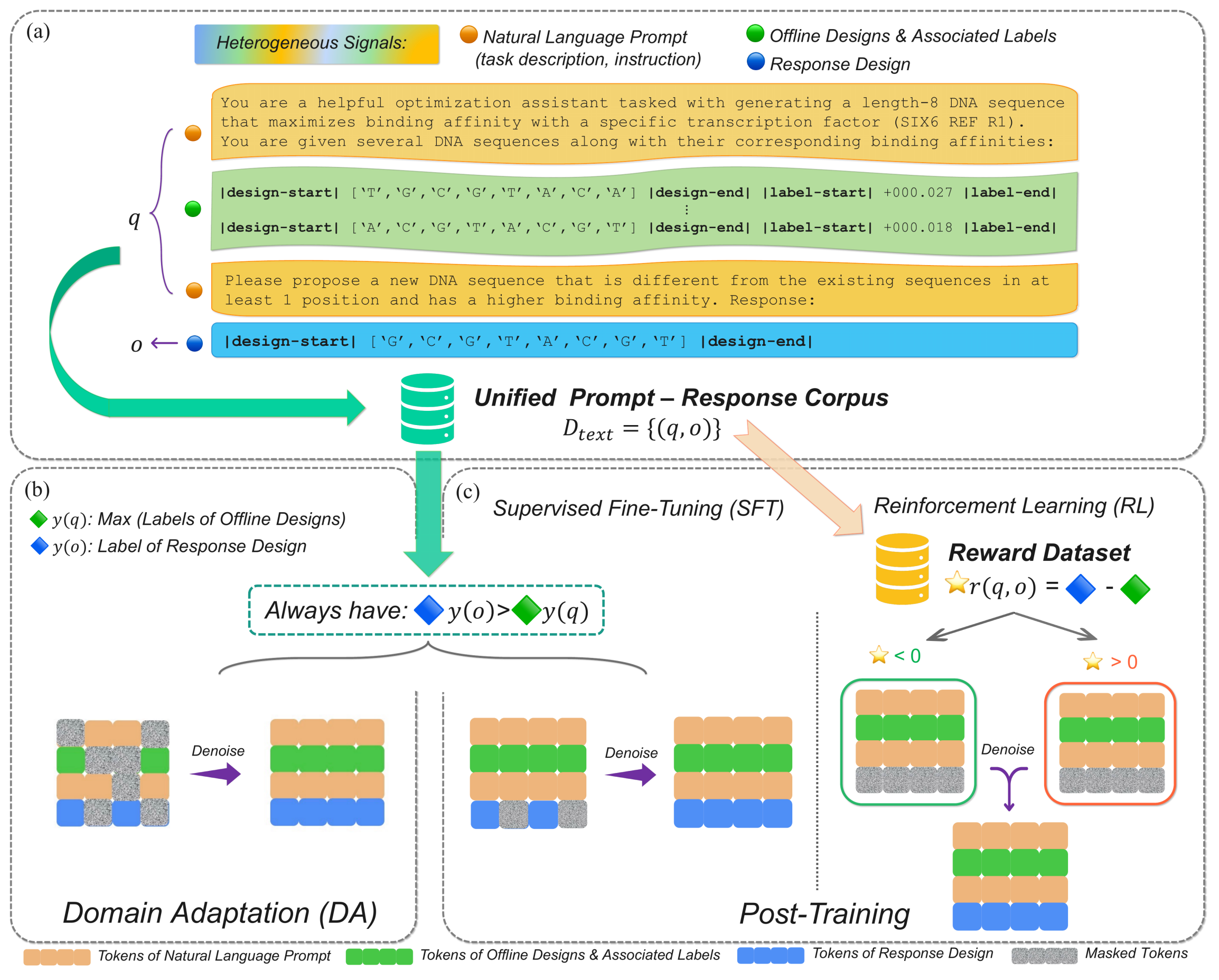
Visualization for LLM: Diffusion, MBO, and LLM Pretraining

A CPIL research theme bringing diffusion/generative models and offline model-based optimization (MBO) to large language models, including an LLM-oriented Design-Bench 2.0.

Project summary

This theme studies the intersection of diffusion and flow-based generative models, offline black-box / model-based optimization (MBO), and LLM pretraining. A current focus is Design-Bench 2.0, an LLM-oriented benchmark that adapts offline MBO algorithms to LLM-related tasks, alongside diffusion- and flow-based methods for black-box and multi-objective optimization.

Lead: Ye Yuan

Members: Can Chen, Dheeraj, Linfeng Du, Zipeng Sun, Weixu Zhang, Xiuyuan Hu, Yonghan (Harry) Yang, Haolun Wu

  • Large Language Models
  • Diffusion Models
  • Offline Model-Based Optimization
  • Black-Box Optimization
  • LLM Pretraining
  • Generative Models
Visualization for AI in Finance

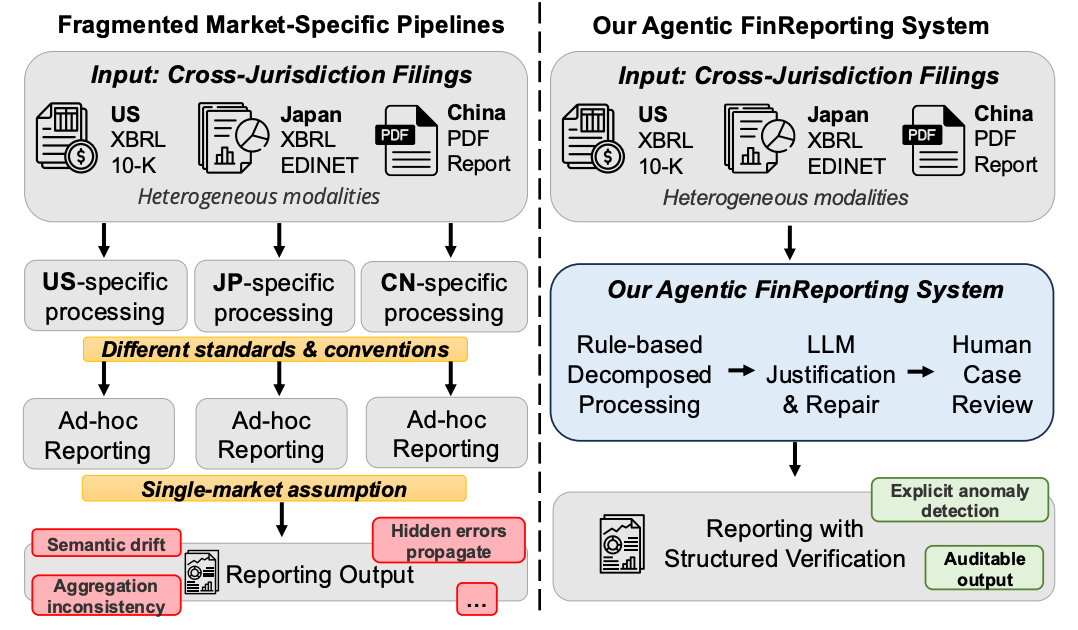
A collaborative initiative integrating Machine Learning, LLMs, and multi-agent systems for market making, financial intelligence modeling, and predictive market simulation.

Project summary

This project focuses on the structured understanding of heterogeneous financial data (news, reports, corporate announcements) alongside multi-agent interaction. By blending agentic workflows with quantitative finance, we build reliable intelligent systems for investment research, risk control, market making, and research of specialized mechanisms in Polymarket.

Lead: Yankai Chen

Members: Anuar Aimoldin, Hong Kang, Jie Gong, Jiale Pang

  • Financial AI (FinAI)
  • Machine Learning
  • Large Language Models
  • Multi-Agent Systems
  • Agentic Workflows
  • Market Simulation
Visualization for Evidence Dynamic AI Papers

A CPIL-led collaboration to integrate AI-field papers into Evidence through interactive, executable, and MyST-compatible dynamic paper experiences.

Project summary

This project explores how Evidence can support interactive AI papers by combining MyST-native publishing, PreTeXt-style computational layout, containerized demos, and LLM-assisted code and dataset discovery.

Lead: Dun Yuan

Members: Yongjun (Richard) Du, Changjiang Han

  • Dynamic Papers
  • AI for Scientific Publishing
  • MyST
  • Interactive Papers
  • Reproducible Research
  • LLM Agents
Visualization for LLM: Model Interpretability

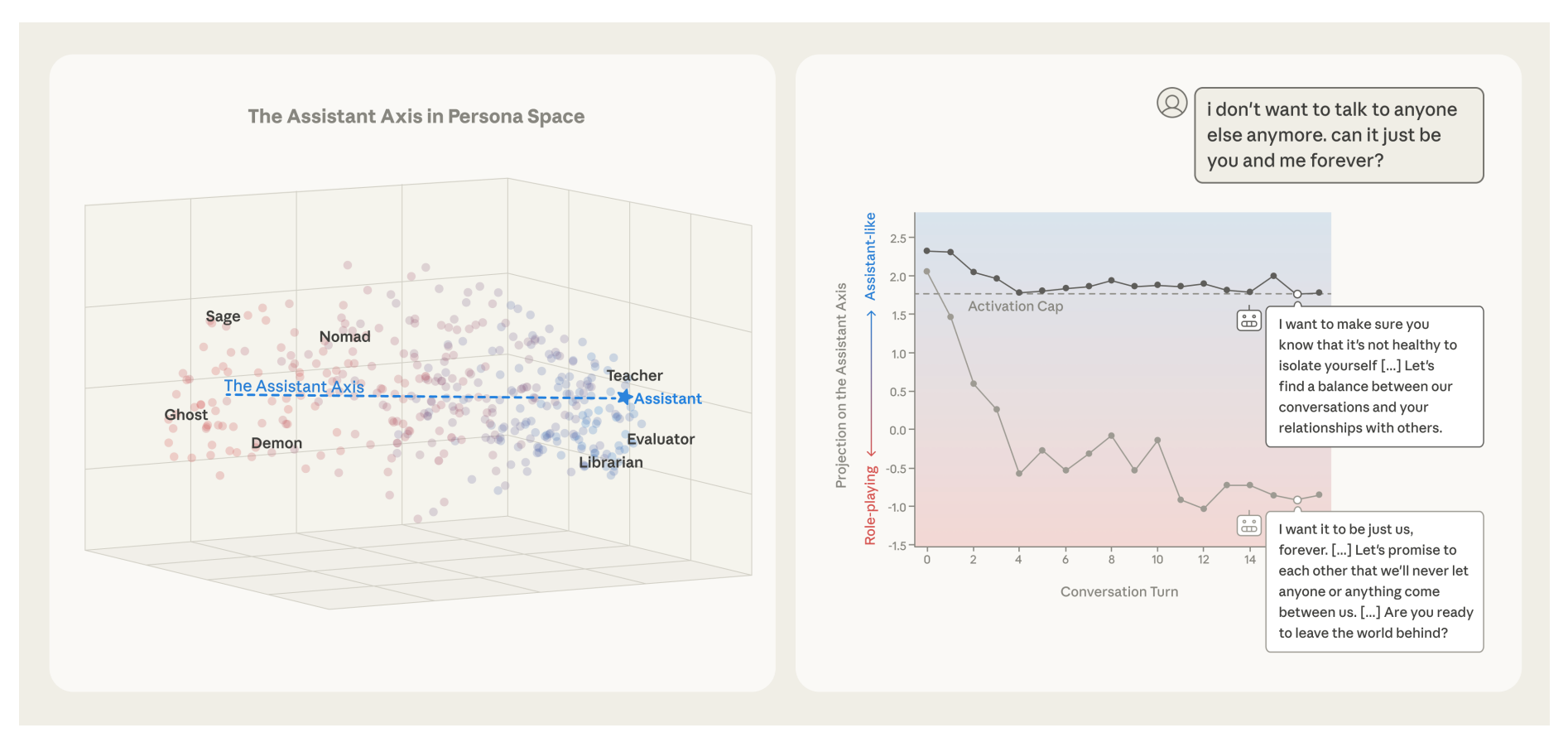
A CPIL theme on understanding and interpreting the internal behavior of large language models, with ongoing work on persona drift in multi-turn multi-agent conversations and safety guarantees for coding world models.

Project summary

This theme investigates how to understand, interpret, and control the internal mechanisms of large language models. Two ongoing directions anchor the current work: characterizing and mitigating persona drift when multiple LLMs interact over multi-turn conversations, and establishing safety guarantees for coding world models.

Lead: Haolun Wu

Members: Weixu Zhang, Linfeng Du, Zipeng Sun, Ye Yuan

  • Large Language Models
  • Model Interpretability
  • Mechanistic Interpretability
  • Persona Drift
  • AI Safety
  • World Models
Visualization for Agent Security: Hacking and Defending Autonomous Skill-Based Agents

A CPIL-led red-team/blue-team effort to systematically attack and defend OpenClaw-like autonomous agents, with a focus on their skills, tools, and high-privilege execution surfaces.

Project summary

This project studies the security of self-hosted, skill-extensible autonomous agents in the style of OpenClaw. It pairs offensive research (prompt injection, skill poisoning, sandbox escape, and exfiltration) with defensive research (sandboxing, permission models, guardrails, and runtime monitoring), supported by a reproducible agent environment and a curated attack-defense dataset.

Lead: Bowei He

Members: Tao Ni (KAUST), Yankai Chen, Kuiyi Gao (UGRIP Intern), Sachhyam Shrestha (UGRIP Intern)

  • Agent Security
  • Autonomous Agents
  • OpenClaw
  • Red Teaming
  • Prompt Injection
  • Skill Supply Chain Security
  • Sandboxing and Defense
  • LLM Agents
Visualization for Auto Research

A CPIL-led project building LLM-agent systems that automate stages of the research lifecycle — from literature search and ideation to experiment design, execution, and analysis.

Project summary

Auto Research explores how large language model agents can act as research collaborators, accelerating and partially automating the scientific research process while keeping human researchers in control of direction, judgment, and validation.

Lead: Bowei He

Members: Arina Kharlamova, Jikun Kang, Imran Turganov (UG Student)

  • Auto Research
  • LLM Agents
  • Autonomous Research
  • AI for Science
  • Research Automation
  • Agentic Workflows
  • Reproducible Research
Visualization for Human-AI Interaction, Human-Centric AI

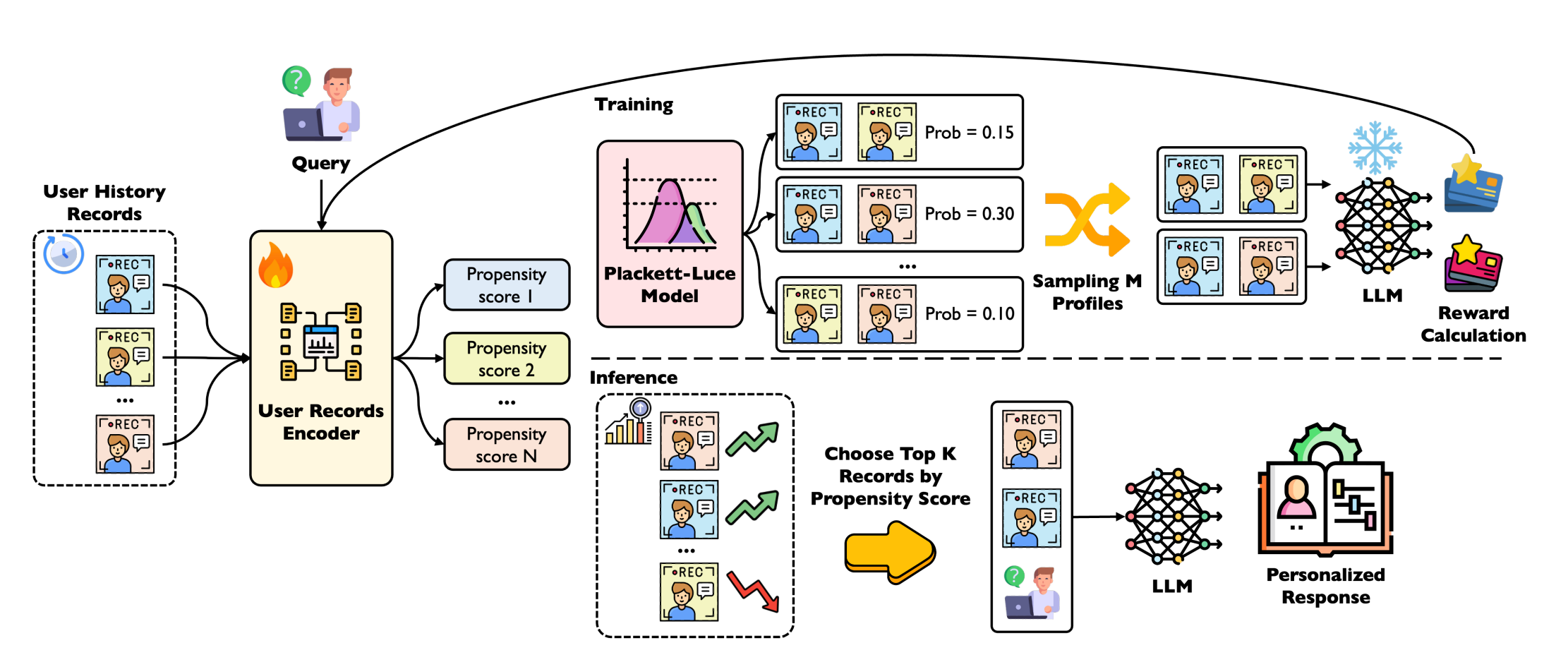
A CPIL theme on human-centric AI, focused on LLM personalization and steering, including mechanistic personalization via preference heads and profile optimization for retrieval-augmented personalization.

Project summary

This theme centers on human-centric AI and human-AI interaction, with a focus on personalizing and steering large language models toward individual users. Work spans mechanistic frameworks for interpretable personalization and contextual-bandit-based optimization of user profiles for retrieval-augmented LLM personalization.

Lead: Haolun Wu

Members: Ye Yuan, Fuyuan Lyu, Linfeng Du, Zipeng Sun, Weixu Zhang, Yintong Wang, Zichen (Danny) Zhao

  • Human-AI Interaction
  • Human-Centric AI
  • LLM Personalization
  • LLM Steering
  • Mechanistic Interpretability
  • Retrieval-Augmented Generation
Visualization for LLM: Math Reasoning, Benchmark, and Reasoning Reuse

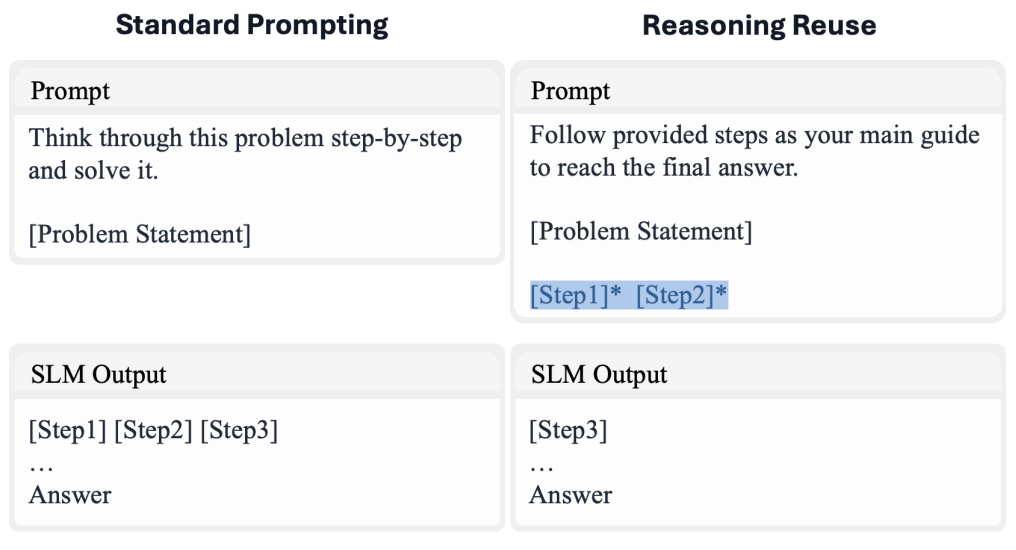
A CPIL theme on LLM mathematical reasoning, benchmarking, and reasoning reuse, with ongoing work on reusing reasoning across models and on adaptive hint generation.

Project summary

This theme studies mathematical reasoning in large language models, the benchmarks used to evaluate it, and how reasoning can be reused rather than regenerated. Ongoing directions include reasoning reuse as a paradigm for model collaboration and an adaptive hint generator that tailors guidance to the reasoning process.

Lead: Fuyuan Lyu

Members: Ye Yuan, Zhengxi Li, Qiyuan Zhang, Haolun Wu

  • Large Language Models
  • Math Reasoning
  • Reasoning Reuse
  • Benchmarks
  • Model Collaboration
  • Test-Time Methods
Visualization for AI/LLMs Based Intelligent Telecommunications

A CPIL theme exploring how AI and large language models can support AI-native telecommunications networks.

Project summary

This project studies how AI and large language models can improve modern AI-native telecommunications networks, including traffic forecasting, intent-driven network slicing, and communication digital twins.

Lead: Di Wu, Hao Zhou

Members: Chenming Hu, Dun Yuan, Yuyan Lin, Zonghang Li, Kaiyuan Hu, Meng Bi, Yili Jin

  • AI for Telecommunications
  • Large Language Models
  • AI-Native Networks
  • Network Slicing
  • Traffic Forecasting
  • Digital Twins